
El Paso Scheduled Release Dates
A projected release date is an estimate based on sentence, credits, parole eligibility, detainers, and agency calculations. It is not the same as the actual moment a person walks out of custody. In El Paso County, the first split is between county jail custody and CDOC custody. The sheriff search can show a release-date field on a booking charge, but it does not publish a forward-looking release calculator. CDOC is the state-prison source for sentenced inmates.
Pretrial detainees are different. A person held before trial may be released by bond, personal recognizance, court order, dismissal, warrant action, or transfer. That person may not have a projected release date at all. The right question is whether a court or jail event has authorized release and whether any holds remain.
Scheduled is not final. An El Paso County release date can change because of credits, discipline, court orders, warrants, detainers, parole action, or transfer processing.
Find El Paso Release Dates
The lookup path starts with custody type. County-jail releases and state-prison releases are stored by different agencies. If the person was sentenced to CDOC from an El Paso County case, the sheriff roster may no longer be useful even though the court case started locally.
- Decide whether the person is in county jail, state prison, parole status, federal custody, or immigration custody.
- For El Paso County Jail custody, search the sheriff booking page by booking number or last name.
- Review release-date fields, holds, warrants, bond type, bond amount, and court case number together.
- For a state sentence, search the CDOC Offender Search by DOCNO when known.
- Use the court docket to confirm the sentence, bond order, mittimus, probation, dismissal, or warrant action.
- Use VINE Inmate Check for alerts when the person has not yet been released.
- Request formal time-computation or release records from the agency that owns the record.
El Paso CDOC Release Lookup
The Colorado Department of Corrections search is the statewide source for adult CDOC records. It should be used for El Paso County defendants after the person enters the state prison system, or when the question involves parole, discharge, or state supervision. It is not the first source for a short county-jail bond release.
| CDOC Search Field | Research Guidance |
|---|---|
| DOCNO | Primary department identifier, numeric and up to six characters according to CDOC tips. |
| Last name | Name searches match names that begin with the entered letters. |
| First name | Optional field that can narrow common-name matches. |
| Gender | Supplemental field; use All if uncertain. |
| Name format | Hyphenated last names should be run together, and the record name may be the prosecuted name. |
The CDOC offender search home page is the official starting point for state release-date research.
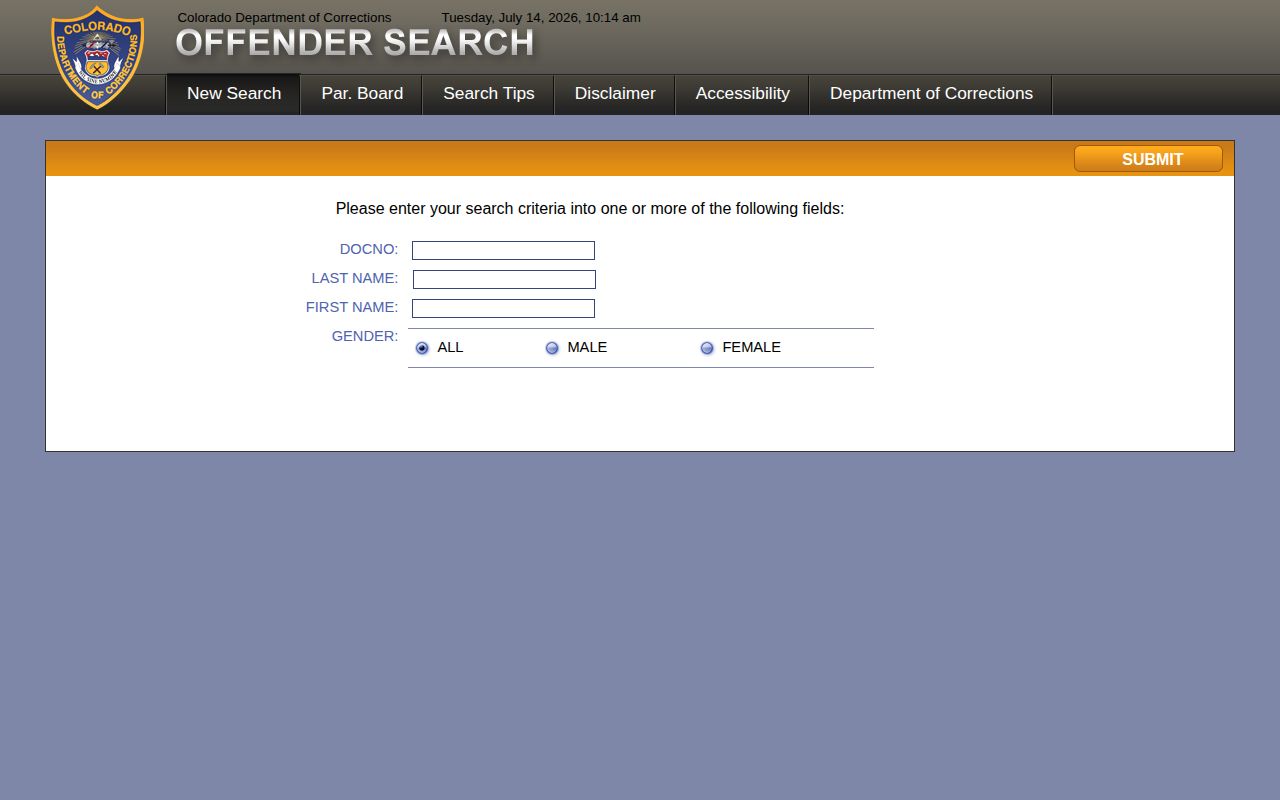
Use the live CDOC profile for current status, then confirm formal time calculations through CDOC records when precision matters.
Colorado Time Computation Rules
Colorado release dates are governed by sentence type, offense date, offense category, jail credit, earned time, parole eligibility, mandatory release rules, and court orders. The core adult sentence-computation statutes are in C.R.S. Title 17, Article 22.5. The research does not support a blanket statement that every Colorado prisoner serves exactly one percentage of a sentence.
Some sentence types and violent-offense categories carry special eligibility rules or mandatory portions. Other sentences use different earned-time and parole structures. A projected date can move when CDOC awards or withholds earned time, when discipline affects credits, when a court changes a sentence, or when parole action changes the path to release.
- Earned time
- Credit that may reduce the time served under Colorado rules when the sentence allows it.
- Parole eligibility
- The point when parole review may occur, not a promise of release that day.
- Mandatory release
- A statutory release framework that still depends on the sentence and applicable law.
- Jail credit
- Credit for qualifying time already spent in custody before sentencing.
Why El Paso Dates Change
Projected release dates change because they are calculations, not static facts. The court sentence starts the framework. The jail, CDOC, parole board, and other custodians may affect the path after that. A date shown in one system should be checked against the system that controls custody.
| Change Factor | Effect on Release Date |
|---|---|
| Earned time awarded or withheld | Can move an eligible state-prison date earlier or later. |
| Disciplinary action | May affect credits or release planning. |
| Detainer or warrant | Can block physical release even when one sentence or charge ends. |
| Parole decision | Grant, denial, deferral, revocation, or rescission can change the expected path. |
| Court order | Resentencing, amended mittimus, credit order, or new warrant can alter the calculation. |
| Transfer | County release may lead to CDOC, federal, ICE, or another county custody. |
The parole calendar is not a substitute for a time-computation record. A hearing date can show that a review is scheduled, but the outcome and actual release path depend on board action, CDOC processing, and any outside holds. If the person has an El Paso County sentence history, compare the CDOC status with the El Paso County court case so the projected date is tied to the correct sentence.
El Paso County Jail Dates
For a county-jail sentence, the sheriff and court record matter more than CDOC. The sheriff public search can show booking detail and a release-date field at the charge level, but it does not provide a forward-looking projected release calculator. If the person is serving a short county sentence, call the booking desk or request the jail record. If the sentence came from an El Paso County case, use the court file to confirm jail credit, sentence terms, probation, or any later modification.
For a person no longer visible online, use the Sheriff's Office records request page. Include full name, date of birth if known, booking number if known, date range, court case number, and a precise request for the booking or release record.
Confirm El Paso Release Dates
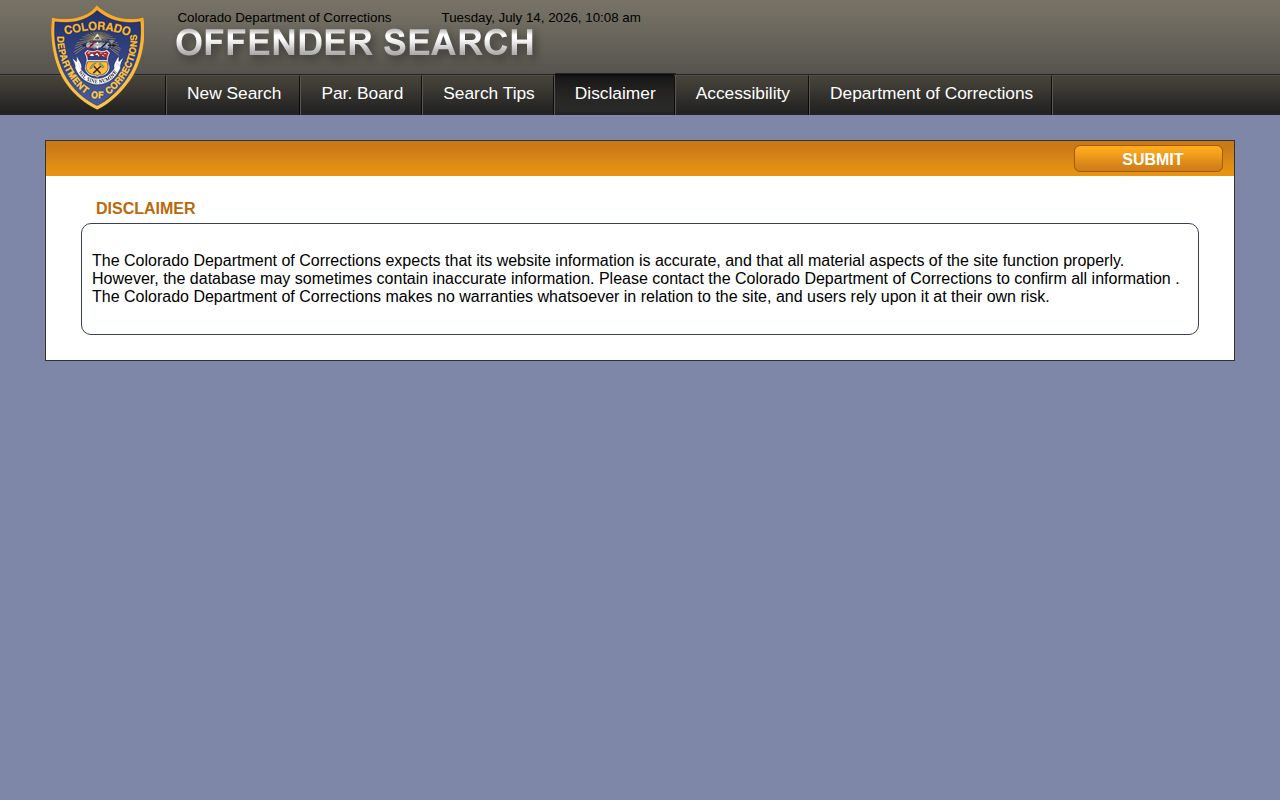
CDOC's disclaimer states that its database may contain inaccurate information and should be confirmed with the department. The sheriff search also warns against taking official action without booking desk confirmation. Those warnings are practical, not just legal boilerplate. Release dates are sensitive to data timing and agency boundaries.
Use the CDOC disclaimer when weighing state search results.
For a formal date, ask the custodian that owns the sentence or booking record rather than relying only on a public search page.
Note: A projected CDOC date, a county charge release date, and a court disposition date can be three different record facts.
El Paso Parole Date Effects
For a person sentenced to CDOC from an El Paso County case, parole can affect the practical release timeline. The Colorado State Board of Parole makes parole-release decisions, while CDOC handles offender records and Adult Parole supervision. A parole grant does not always mean same-day physical release. Release-plan approval, detainers, warrants, administrative processing, or a later board action can change the actual date.
The CDOC offender-search application includes a Parole Board calendar tab. During research, that calendar displayed rolling monthly schedules and described hover and click interactions for viewing daily schedules. Use the calendar as a live schedule source, then reconcile any board action with the CDOC profile and the court sentence. The court record explains the sentence. CDOC and the parole board explain state custody and parole timing.
| Parole Factor | Release-Date Impact |
|---|---|
| Eligibility date | Marks when review may occur, not an automatic release. |
| Board grant | Can move the person toward release if other conditions clear. |
| Board denial or deferral | Can push the expected release path later. |
| Detainer or warrant | Can block physical release even after a favorable parole step. |
El Paso Court Sentence Records
The El Paso County court file is the sentence source. It can show the disposition, sentence length, jail credit, probation terms, mittimus to CDOC, amended orders, and warrant actions. A CDOC projected date should be compared with the sentence in the court record when the case started in El Paso County. If the court changes credit or sentence structure, the release calculation can change.
For county-jail sentences, the court docket and jail record work together. The docket can show sentence imposed or time served. The jail record can show booking and release facts. For probation, the court record can show the probation sentence or later termination. For parole, use CDOC and parole records after the state sentence begins. That separation keeps a release date lookup from mixing county, court, and state records into one unreliable answer.
When the question is urgent, use the booking desk for a person still believed to be in the El Paso County Jail. When the question is historical, use the records request and court file. When the question is a future CDOC date, use the offender search, CDOC records, and the statute framework rather than the county jail page. Each source answers a different part of the release-date problem.
El Paso Transfer Date Limits
Some El Paso County release dates are really transfer dates. A person can leave county custody because of a federal warrant, U.S. Marshals process, ICE custody, another county hold, or a CDOC sentence. The county record may show the sheriff no longer holds the person, but it does not establish the later federal, immigration, or state release date. Use BOP for federal prison release and ICE for adult immigration custody checks when those facts fit.
This is why a release-date lookup should start with custody classification. County jail, CDOC, BOP, and ICE each keep different records. A county release date, a state parole date, and a federal release date can all be valid dates in one person's timeline.
When a transfer is possible, record the date and custodian named by each source. The sheriff can confirm when El Paso County custody ended. CDOC, BOP, or ICE must confirm what happened after that point. The court docket often explains why the transfer occurred.
Do not collapse those dates into one answer. A county release, state parole eligibility date, actual parole release, federal release, and immigration release can each refer to a different event. The safest lookup keeps the date tied to the agency that reported it.
If a family member has only heard that the person was "released," ask released from which custody. That single question often decides whether to search the sheriff, CDOC, BOP, ICE, VINE, or the court docket first.